Conditioning vs Processing Flowers: What Is the Difference?
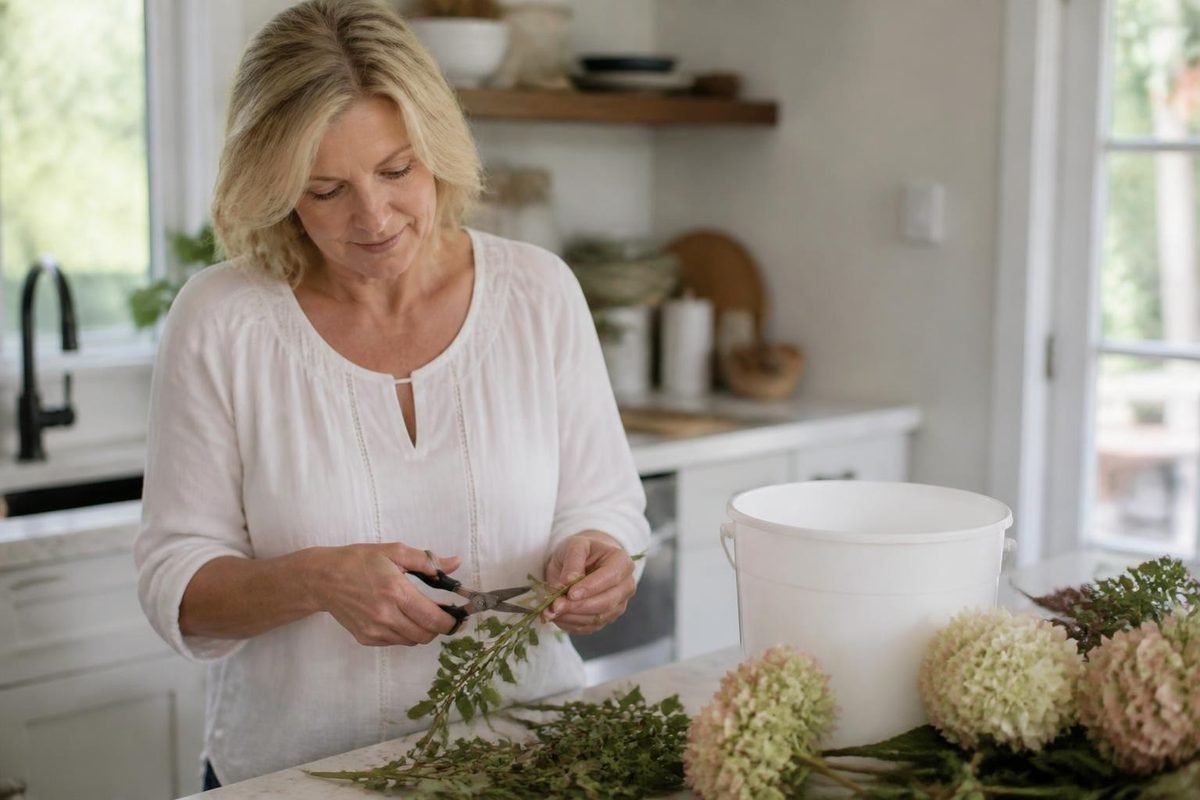
Processing flowers means unpacking and preparing freshly cut stems for water and arranging. Conditioning is the period of care that helps those stems take up water and recover before you use them.
What processing involves
Processing starts as soon as the flowers arrive. Remove their packaging, sort the stems and check for damaged or wilted material. Handle blooms gently, especially delicate petals that bruise easily.
Next, remove any leaves that would sit below the waterline. Leaves left in water can encourage bacterial growth, which makes it harder to keep the water clean. You do not need to strip every leaf from every stem. Keep the foliage that adds shape and looks healthy.
Use clean, sharp tools to cut the ends of the stems before placing them in a clean container of water. A fresh cut exposes stem tissue that can absorb water. For most flowers, a diagonal cut is a simple choice.
- Remove wrapping and check the flowers.
- Take off damaged foliage and leaves below the waterline.
- Trim the stems with clean, sharp tools.
- Place the stems in clean water.
What conditioning does
Conditioning gives flowers time to drink after harvesting, travel or time out of water. It usually happens after the initial processing, with stems standing in clean water in a cool place away from direct sun and heat.
Some flowers may perk up within a few hours. Others benefit from a longer rest, often overnight. The time needed depends on the flower and its condition, so look at the stems rather than treating the clock as the boss.
Keep the container clean and give the flowers enough room. Crowding can damage petals and make it difficult to see which stems need attention. If the water becomes cloudy, replace it and clean the container.
How the two steps work together
Think of processing as the hands on preparation and conditioning as the recovery time that follows. The fresh cut and clean water put stems in a position to drink. Rest gives them a chance to do it before they go into a vase or arrangement.
The terms can overlap. Some people use conditioning to describe the whole process of preparing and hydrating flowers, including trimming stems and removing leaves. If you are following care instructions, check the actual steps rather than relying on the label alone.
Once conditioned, flowers are ready to arrange. Keep their vase clean, refresh the water regularly and remove fading material. Good care does not make flowers last forever, but it gives them a cleaner place to spend their vase life.
Questions about flower care
Can I arrange flowers straight after processing?
You can, but giving them time to drink first may help tired stems recover. This is useful if they have spent a while out of water.
Do all flowers need the same conditioning time?
No. Different flowers and different levels of dehydration call for different amounts of time. Check their appearance as they rest.
Should I remove every leaf?
No. Remove leaves that would sit in the water and any that are damaged. Healthy leaves above the waterline can stay.
More on this: https://promociones-woo.com/como-enviar-flores-a-un-ser-querido-en-europa-cuando-estas/